
A Dipper and a Bucket Do Different Jobs
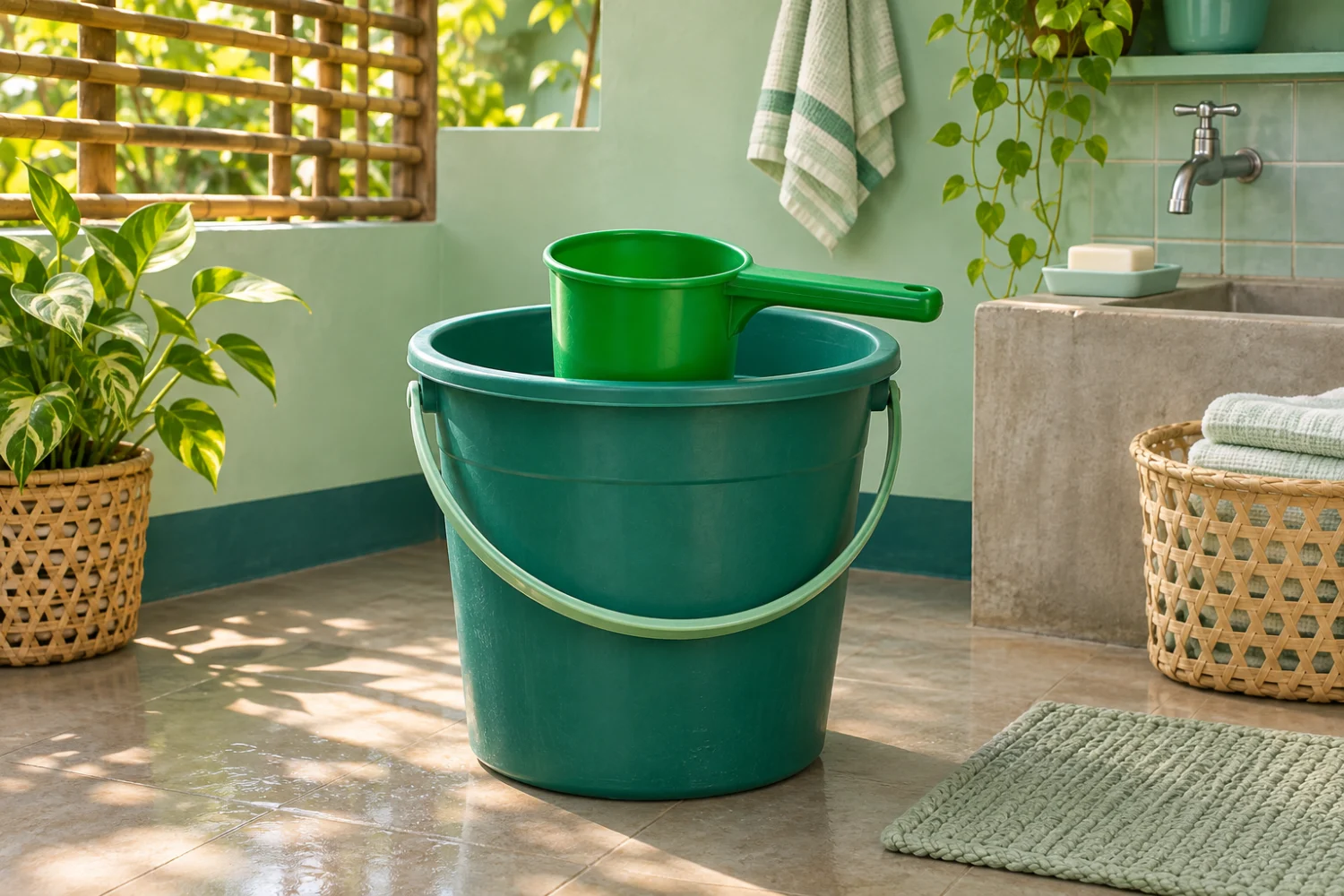
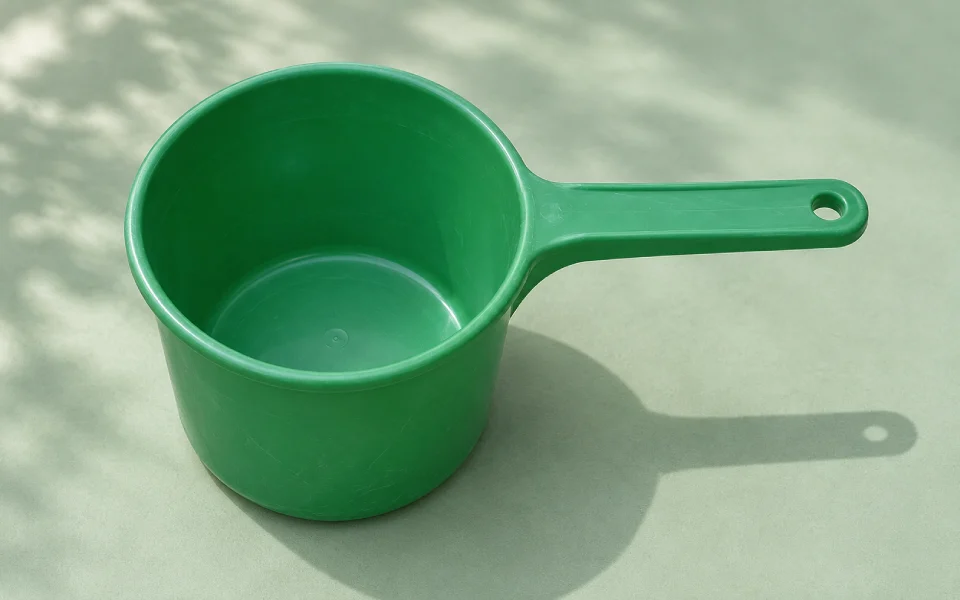
A tabo is easiest to understand when you see it next to a timba, the Filipino word for bucket. The bucket can stand on the floor and hold enough water for several pours. The tabo takes a portion from that supply. Its bowl holds the water briefly and its handle gives you a place to grip while you lift and tip it. Once the bucket is in position, you can move water to a basin or across the floor without lifting the bucket again.
The two pieces need to fit together in practice. A wide dipper may hold plenty of water but catch on the rim of a narrow bucket. A deep bowl can also be harder to fill when the water level is low. In that situation, turning the bowl sideways may help it take up a shallow scoop. Think about the width of the bucket opening, the room you have to tilt the bowl, and how the dipper feels in your hand when full.
How the Shape Changes the Pour
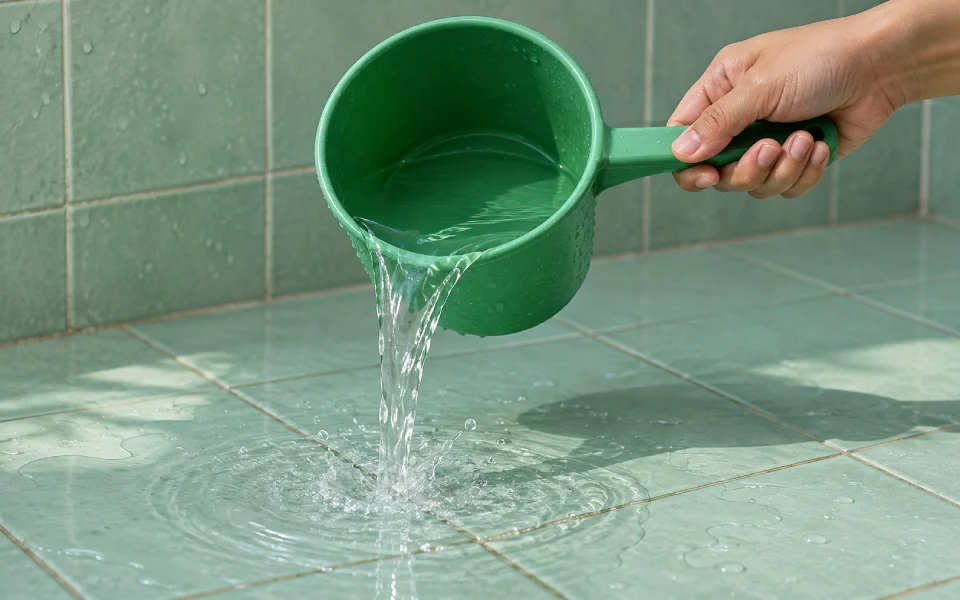
The basic motion is to lower the bowl into the water, lift it by the handle, and tip it over the place you want to wet. How much you scoop and how far you tilt the bowl change the pour. If the bowl is full, a small tilt may send water over the edge. If the bowl is partly full, you can carry it farther with less spilling and bring the rim closer to the target before you pour.
The target matters as much as the amount. Rinsing a broad patch of floor can call for a wider pour. Adding water to a small basin is easier if you hold the bowl close to its edge and pour steadily. A plastic dipper with a comfortable grip is easy to turn by hand. A loose handle or cracked rim makes it harder to guide the water, especially if you need to stop the pour halfway through.
Where the Tabo Fits in Daily Routines
During bucket bathing, a person can use several scoops to wet the body, then use more to rinse away soap. The dipper returns to the bucket between pours. In a bathroom that already has a shower, someone might pick up the dipper only to rinse the wall below a tap, fill a basin, or bring water to a corner outside the shower stream. Each use relies on the ability to carry a small amount to a specific place.
Placement varies with the room. Keeping the dipper near the bucket makes sense if both are used together. Where there is a suitable hook, the dipper can hang with the bowl angled down so water can drain after rinsing. A household that uses one dipper for personal washing and another for cleaning can keep them in separate spots or choose different colors. Those small choices make it easier for everyone sharing the space to find the right one.
What to Look For in a Filipino Home
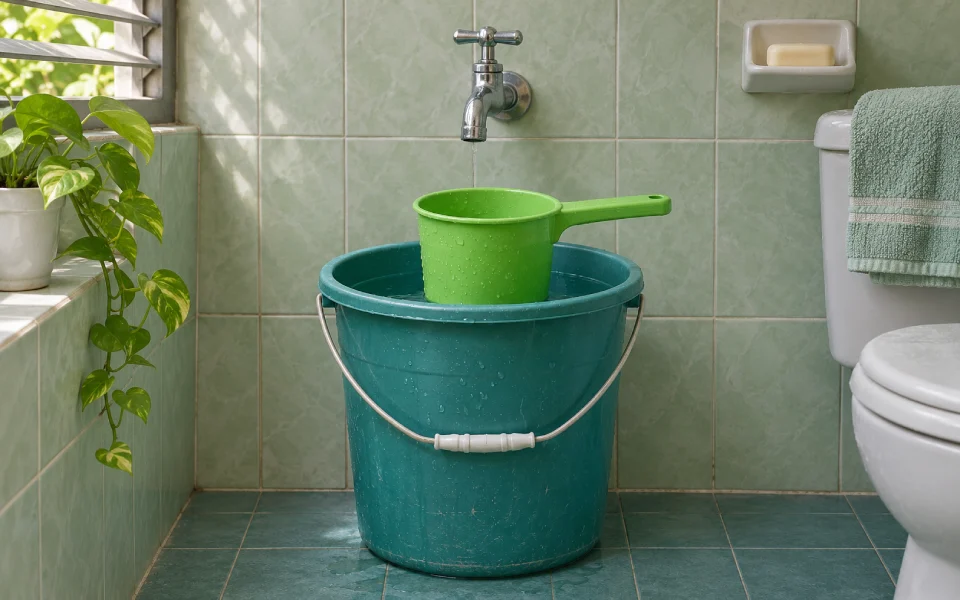
A tabo beside a shower and a tabo beside a bucket under a tap may look alike. The objects around them help explain how each is used. A bucket under a tap is easy to refill. A dipper stored beside a basin is ready for a small pour. A bowl turned down on a rack suggests that the rack doubles as a place to let it drain. These details are easier to notice in a photograph that shows the wider washing area.
One room can support several routines across a day. Someone may shower in the morning, use a dipper later to rinse a cleaning cloth in a basin, and leave the bowl to drain afterward. In another home, the bucket and dipper may be used together each time someone bathes. Looking at the water source, the container, and the destination of the pour gives a clearer picture of the routine than the dipper’s color or size alone.